Hertility Logo
Tests
Appointments
Treatments
Symptoms
Learn
Workplace

Thinking about IVF? Here’s how to navigate your next steps in the UK

author

Dr Sugha Murugesu MBBChir MRCP MRCOG

Published: July 17th, 2026 | Last medically reviewed: July 17th, 2026

12 minute read

Starting the IVF journey can feel like a big and emotional step. It’s completely natural to feel unsure about where to begin, especially when faced with unclear pricing or mixed advice.


At Hertility, we understand how overwhelming this process can feel. Every day, we support people who are trying to make sense of their options and take their next steps with confidence.


We believe you deserve clear, supportive guidance when it comes to your reproductive health. That’s why our team of scientists and clinicians has created this guide, to bring together the information you might need as you begin exploring your path to parenthood.


Our aim is simple: to help you feel informed, supported, and more in control of your choices. Whether you’re just starting to consider IVF or looking for guidance on assessments, treatment, or next steps, we’re here to support you along the way.

An egg being fertilised in a lab during IVF

Current landscape of IVF clinics

The UK fertility sector has seen significant growth over the last decade, particularly within the private sector. While this means more choice for patients, it has also created a landscape that can feel overwhelming for those already processing the emotional weight of struggling to conceive. From our clinical work supporting thousands of patients, we see first-hand how variation between clinics can impact both experience and outcomes.

Clinics vary widely in their approach. You will find differences in:

  • Pricing structures: Clinics are free to set their own price lists, meaning you may pay different amounts for the same treatment depending on the provider. Some offer "all-inclusive" packages, while others are "pay-as-you-go."

  • Treatment "Add-ons": Optional, non-essential procedures offered alongside standard IVF, offered to potentially improve success rates. In some cases there may be a justifiable reason to use them, however many lack high-quality evidence of improving success rates.1

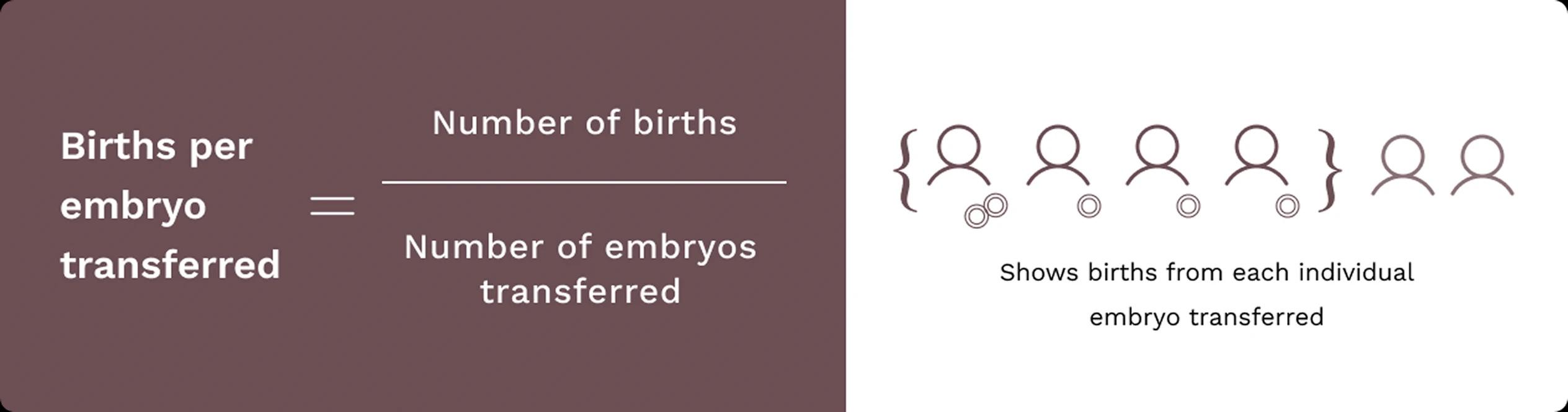
  • Success rate reporting: Clinics often present data differently. The HFEA’s preferred comparison metric is births per embryo transferred, not just live birth rate, and never ‘pregnancy rate’ alone, however some clinics report success as births per egg collection procedure.

Births per embryo transferred: number of births divided by number of embryos transferred

All this variation is why many people feel a sense of 'choice paralysis.' Understanding that this complexity exists is the first step toward cutting through the noise and finding a provider that aligns with your specific needs and reflects why Hertility provides clinically-led support designed to bring clarity, trusted information, and personalised next steps before you enter treatment.

A couple in a consultation with a doctor

NHS vs. private route

In the UK, fertility care is split between the NHS and private providers. Understanding the nuances of both is essential for planning your timeline and your finances. In our clinical experience, many patients benefit from understanding their fertility baseline earlier, before entering either pathway.

The NHS route:

Accessing IVF on the NHS typically begins with a GP referral. However, funding is not universal and is determined by local Integrated Care Boards (ICBs) based on the clinical needs of their population, creating what is widely known as a 'postcode lottery.'

Most ICBs share a core set of access criteria, including:

  • Age: Treatment is generally offered up to age 40 or 42, depending on your ICB

  • BMI: A BMI of 19-30 is required by most areas

  • Smoking: Both partners are typically required to be non-smokers

  • Trying to conceive: Most ICBs require evidence of at least two years of regular unprotected intercourse (or six rounds of artificial insemination for female same-sex couples) before a referral is considered, unless a known cause of infertility has already been identified

  • Parental status: Many ICBs will not fund treatment if either partner has living children from a current or previous relationship

  • Ovarian reserve: Some ICBs apply an AMH threshold as part of their eligibility criteria, typically to ensure treatment is appropriate for your reserve level. This varies by area, so check your local ICB policy directly.

How many cycles will the NHS fund?

This is where variation between areas is most stark. A 'full cycle,' as defined by NICE, covers one episode of ovarian stimulation plus the transfer of all resulting fresh and frozen embryos, ending either when every viable embryo has been transferred or when one results in a pregnancy.


In practice, many ICBs fund only a 'non-full' cycle, meaning frozen embryo transfers may not be included, or may be subject to a cap. The number of funded cycles also varies significantly: some areas fund just one cycle, while others fund up to three, depending on age and circumstances. Prior NHS-funded or self-funded IVF cycles are taken into account by most ICBs and may affect how many cycles you're eligible for.2

One thing worth knowing:

Completing a private diagnostic cycle with Hertility does not affect your NHS eligibility. Whether a full private treatment cycle affects your eligibility depends on your local ICB policy - see the Hertility Tip from our consultant gynaecologist Dr Sugha below.

The private route:

Many people choose to self-refer to private clinics to avoid waiting lists or because they do not meet the strict NHS criteria. This includes people who fall outside NHS age criteria, those who have existing children, same-sex couples navigating longer pathways to eligibility, and anyone who simply wants to move faster.

  • Timelines: Treatment can often begin as soon as your diagnostic workup is complete - no waiting list, no referral required.

  • Flexibility: You choose your clinic and, in most cases, your consultant. You're not assigned to whoever is available.

  • Costs: Private treatment is a significant financial commitment. Costs are paid upfront or via finance plans, and the true all-in price is often higher than the advertised package - which is why understanding what's included matters from the start.

Hertility Tip

Going private could affect your chances of getting NHS funded IVF, the answer depends entirely on your local ICB. Some will still fund treatment regardless; others will not. This varies significantly by postcode, so check your local ICB policy before committing to any full private cycle. Your Hertility Advanced Hormone and Fertility Test results and Pelvic Ultrasound Scans are accepted by our clinic partners and do not affect your NHS eligibility, meaning you can take that first step, understand your fertility picture, and keep all your options open.


What types of fertility treatment are available?

IVF is the most well-known treatment, but it is not the only option. Your diagnostic results will determine which path is most likely to lead to a successful pregnancy.

  • IVF (In Vitro Fertilisation): Eggs are retrieved from the ovaries and fertilised by sperm in a lab. The resulting embryo is then transferred back into the uterus.

  • ICSI (Intracytoplasmic Sperm Injection): A variation of IVF where a single healthy sperm is injected directly into an egg. This is often recommended for male-factor infertility.

  • IUI (Intrauterine Insemination): Often referred to as artificial insemination, this involves inserting prepared sperm directly into the uterus around the time of ovulation.

  • Egg freezing: Also known as mature oocyte cryopreservation, this method is used to preserve reproductive potential for the future.

  • Embryo freezing: Fertilised embryos are frozen for use in later cycles, often after a successful IVF round or for future siblings.

  • Ovulation induction: This treatment uses fertility medication (tablets or injections) to stimulate the ovaries to develop and release a mature egg. It is often the first line of care for those with irregular cycles or PCOS and involves close monitoring via ultrasound to pinpoint your most fertile window for timed intercourse or IUI. It is often the recommended first step, and worth knowing about before assuming IVF is the only path.

  • Donor egg / sperm: Using donated genetic material when a person’s own eggs or sperm are not viable.

  • Surrogacy: Another person carries the pregnancy for the intended parents.

Add-Ons:

IVF add-ons is an umbrella term that covers several procedures or technologies that can be used alongside standard IVF treatment. Some commonly offered IVF add-ons include:

  • EmbryoGlue: Using an embryo transfer medium containing hyaluronate, a naturally occurring molecule found in the uterus. Designed to help the embryo adhere to the uterine lining.

  • Time-Lapse Imaging (EmbryoScope): Embryos are placed in an incubator, with a camera capturing continuous images as they develop, allowing embryologists to monitor their development.

  • Preimplantation Genetic Testing (PGT-A): Embryos can be screened for chromosomal abnormalities before transfer. This may help identify embryos with the correct number of chromosomes. PGT-A reduces the risk of miscarriage, but does not significantly vary the overall livebirth rate.

  • Assisted Hatching: A small opening is made in the outer shell of the embryo (zona pellucida) before transfer, intended to help the embryo “hatch” and implant in the uterine lining.

  • Endometrial Scratch: Involves gently disrupting the uterine lining prior to an IVF cycle.

A woman reviewing costs with her bank card and phone

What does IVF cost?

Transparency around pricing is one of the most significant concerns for fertility patients. While every clinic is different, you should prepare for the following typical price ranges for a single private cycle. We regularly see patients underestimate total IVF costs, which is why transparent, evidence-based guidance is central to our approach.


The HFEA does not regulate pricing, but they mandate that clinics provide clear, upfront cost information.

Based on average UK private clinic fee schedules2:

  • Initial consultation: £200 – £350

  • Base IVF package (advertised): £3,500 - £5,500

  • Standard IVF cycle (incl. Tests, storage): £4,900 – £7,000

  • Fertility medication: £1,000 – £2,500

  • Storage fees: £300 – £500 per year

  • ICSI (if required): £800 - £1,500 additional

  • Add-ons: £130 - £3,000 per item

Typically excluded from advertised prices: viral screening (~£200 - £250 per partner), HFEA regulatory fee (~ £100/cycle), anaesthetic and add-ons. The Competition and Markets Authority (CMA) requires clinics to be transparent.

Hertility Tip

"Add-ons" such as PGT-A (genetic testing of embryos) or specialised culture media can add £1,000–£3,000 to your total. Always ask for a 'costed treatment plan' before committing to a cycle so you can see every potential fee in black and white.

Two people talking through options in a consultation

Understanding IVF add-ons

What the evidence actually says

When you start researching clinics, you’ll encounter “add-ons”. These are optional extras offered alongside your standard IVF. They can sound compelling, as they are designed to potentially improve outcomes such as fertilisation, embryo selection, implantation, or pregnancy success. They come with significant additional costs, and importantly limited or mixed scientific evidence supporting them. Our clinical team closely reviews emerging evidence on add-ons to help patients distinguish between what is promising and what is proven.

The HFEA rating system

In the UK, the HFEA reviews the evidence for IVF add-ons using a traffic-light system. These ratings are based primarily on findings from randomised controlled trials (RCTs) assessing whether the add-on improves the chance of having a baby.

Rating

Meaning

Green

Good evidence that the add-on improves the chance of having a baby for at least some fertility patients.

Yellow

Evidence is mixed, limited, or conflicting. More research is needed.

Black

Good evidence shows the add-on does not improve the chance of having a baby.

Grey

There is not enough high-quality evidence to determine whether the add-on works.

Red

Evidence suggests the add-on may reduce success rates or raise safety concerns.

As of 2025, no add-on has achieved a Green+ rating for increasing the chance of having a baby for most fertility patients.

This doesn’t mean they’re never appropriate. In some specific patients, some may be warranted, but you should always ask: why is this being recommended for me specifically, and what will it cost?


You can access the HFEA's guidance and ratings for each individual IVF add-on on their website: Treatment add-ons with limited evidence | HFEA.

Hertility Tip

Clinics are required to link to HFEA add-on ratings and provide clear cost/evidence information before you agree to anything. If an add-on is part of a clinical trial, you cannot be charged for it.

What is the typical IVF timeline?

While every person’s biology is unique, a standard private IVF cycle typically takes between 6 and 10 weeks from your initial consultation to embryo transfer. From supporting our own patients through this process with our trusted partner clinics, we know that timelines can vary significantly depending on individual biology and clinic protocols.

  1. Initial discovery: An initial call or diagnostic period to assess your history.

  2. Doctor consultation: A detailed review of your results and treatment planning.

  3. Investigations: Final scans and blood tests to time the cycle perfectly.

  4. Stimulation: Taking injectable medications for about 10–14 days to encourage multiple eggs to grow.

  5. Egg retrieval: A minor surgical procedure to collect the eggs.

  6. Lab phase: Fertilisation and monitoring embryo development over 3–5 days.

  7. Transfer: Placing the healthy embryo into the uterus.

  8. The wait: A 12–14 day period before a pregnancy test can be taken.

Two hands linked by their little fingers

How Hertility helps you become informed before taking action

We believe you shouldn't have to wait until you're in a clinic chair to get answers. Hertility is designed to be your 'pre-clinic' partner, helping you arrive at your first consultation with your most vital data already in hand.

We partner with the UK’s leading clinics

We work with a carefully selected network of clinic partners who share our values of clinical excellence and pricing transparency.

Your Hertility results are accepted

Our at-home Advanced Hormone and Fertility Tests and Pelvic Ultrasound Scans are accepted by our clinic partners. This means you can avoid the frustration and expense of repeating baseline tests that you have already completed.

Save time and money

By completing your diagnostic tests with Hertility, you can potentially save a significant amount of money and time and you enter the clinic ready to discuss treatment.


You don't need a referral to start understanding your fertility. You just need a plan.

Here's what we'll cover

Introduction

Current landscape of IVF clinics

NHS vs. private route

What types of fertility treatment are available?

What does IVF cost?

Understanding IVF add-ons

What is the typical IVF timeline?

How Hertility helps you become informed before taking action